Best Laminate Flooring for Kitchens UK 2026: What Actually Works
October 14, 2026•admin•16 min read
Best Laminate Flooring for Kitchens UK 2026: What Actually Works
The kitchen is the hardest room in the house to floor well. It combines the moisture risk of a bathroom with the foot traffic of a hallway and the spill hazard of a toddler’s playroom — all in one space. Best laminate flooring for kitchens UK buyers will find that not all products are created equal: standard laminate can swell, lift and warp within months of kitchen installation, while a properly specified moisture-resistant laminate can last a decade or more. This guide explains exactly what to look for, clarifies the important difference between water-resistant and waterproof, and reviews the four best UK kitchen laminate products available in 2026.
This article contains affiliate links. If you buy through them, we may earn a small commission at no extra cost to you. This doesn’t affect our editorial independence — we only recommend products we’d genuinely suggest to a friend.
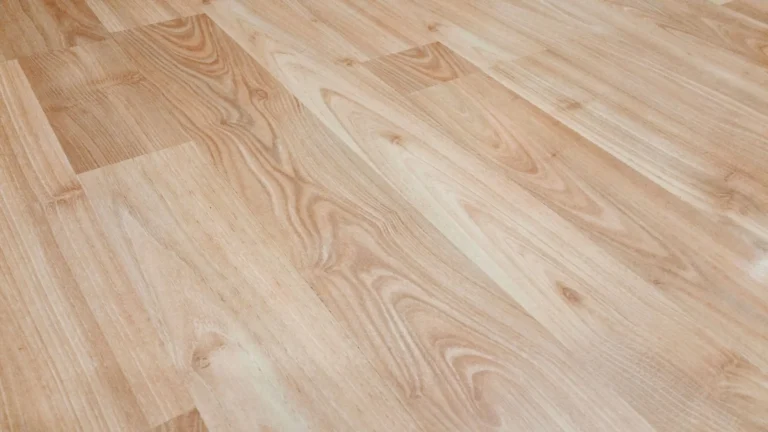
A properly specified moisture-resistant laminate can work well in kitchens — but the product choice matters enormously.
Why Kitchens Are Hard on Laminate Flooring
Standard laminate is a multi-layer product with a high-density fibreboard (HDF) core. HDF is wood fibre under pressure — and wood fibre absorbs water. In a kitchen, laminate faces several threats that don’t apply in other rooms:
Standing water at the sink: Splashes around the sink area are constant. Standard laminate joints are not tight enough to prevent water ingress over time.
Appliance leaks: A dishwasher slow-leak, a fridge ice-maker drip, or a washing machine overflow can put sustained water onto the floor — more than any kitchen laminate will handle.
Steam and humidity: Cooking generates significant steam. A poorly ventilated kitchen can raise ambient humidity enough to cause standard laminate to expand and cup at the joints over time.
Heavy foot traffic: UK kitchens are social spaces. A busy family kitchen may see more daily steps than the main hallway, demanding a high abrasion-resistance (AC) rating.
Point loads: Chair legs, dropped pans and appliance feet create concentrated stress on the surface that lower-specification laminates may dent or scratch.
The result: kitchen laminate needs a meaningfully better specification than what you’d install in a bedroom or living room. Get it right and laminate remains one of the most practical, affordable hard floors for a kitchen. Get it wrong and you’ll be re-flooring within two years.
What to Look For: Kitchen Laminate Specification Checklist
AC Rating: Go AC4 as a Minimum, AC5 for Heavy Use
The AC (Abrasion Class) rating system, set by the European standard EN 13329, measures surface hardness and scratch resistance. The scale runs from AC1 (very light residential) to AC6 (heavy commercial). For kitchens:
AC3: General residential. Fine for bedrooms; borderline for a living room; not recommended for kitchens with regular use.
AC4: Heavy residential / light commercial. The minimum you should consider for a kitchen. Resists scratches from chair legs, pet claws and appliance movement.
AC5: Heavy commercial. Overkill for most domestic kitchens, but worth the small additional cost if you have pets, children, or high footfall. Some premium kitchen laminates are AC5 rated.
Thickness: Minimum 8mm, Ideally 10–12mm
Thicker boards are more stable, feel more solid underfoot and cope better with minor subfloor imperfections. For kitchens, 8mm is the practical minimum — anything thinner risks flexing under appliance loads and feels hollow underfoot. Most serious kitchen laminates are 10mm or 12mm. The extra thickness also improves acoustic performance, which matters in open-plan kitchen-diners.
Moisture-Resistant Core
This is the most important specification for kitchen use. Look for laminate that explicitly states a moisture-resistant or hydrophobic HDF core. Brands like Quick-Step refer to this as “Uniclic Multifit with sealed joints”; Pergo uses “TitanX” surface technology; Kronospan treats the HDF core for moisture resistance. What this means in practice: the board resists short-term water exposure — a spill left for 30 minutes — without swelling. It does not mean the floor is waterproof. Sustained flooding will still cause irreversible damage to any laminate product on the market.
Tight Locking Joint System
Water gets into laminate through the joints between boards, not through the surface. A tight locking system — one that draws the boards together under the surface profile — dramatically reduces joint ingress. Look for brands that explicitly market their locking system’s water resistance. Quick-Step’s Uniclic, Pergo’s PerfectFold and Kronospan’s DropLoc systems are all designed with tight joint profiles.
The Critical Distinction: Water-Resistant vs Waterproof
Every kitchen laminate on this list is water-resistant, not waterproof. That distinction matters enormously. Water-resistant means the product can handle normal kitchen splashes, a damp mop, or a briefly puddled spill. It does not mean the floor will survive a dishwasher leak left overnight or a burst pipe. If you want genuinely waterproof kitchen flooring, you need LVT (luxury vinyl tile) or ceramic tile — see our best LVT flooring UK guide for a full comparison. For households with a history of appliance leaks, LVT is the more prudent choice.
Best Laminate Flooring for Kitchens UK: Top 4 Products in 2026
1. Kronospan Kronotex Mega Plus — Best Budget Moisture-Resistant Laminate
Kronospan’s Kronotex Mega Plus range is the most competitively priced kitchen-suitable laminate from a reputable manufacturer. At around £14–£18/m², it punches above its weight. Key specs: AC4 rating, 10mm thickness, and Kronospan’s moisture-resistant HDF core with a hydrophobic wax treatment on the edges at the factory. The plank profiles use Kronospan’s DropLoc system for a reliable tight click with minimal joint gap.
The design range includes realistic oak, grey-toned and concrete-effect options well-suited to modern kitchen aesthetics. The Mega Plus has the advantage of being widely available through UK independent flooring retailers and B&Q, making it easy to source and match if you need additional packs later. Where it falls short: the surface texture is less convincing up close than mid-range competitors, and the 10mm thickness means it’s slightly less stable than 12mm options under heavy appliance loads.
Best for: Budget-conscious homeowners who want a proven kitchen laminate without paying premium prices. AC4 / 10mm / moisture-resistant core / approx. £14–£18/m².
2. Quick-Step Impressive Ultra — Best Mid-Range, Genuinely Water-Resistant
Quick-Step Impressive Ultra (IU) is arguably the best-value kitchen laminate for UK homeowners who want genuine performance without spending premium prices. It uses Quick-Step’s Uniclic Multifit locking system with sealed joints — the manufacturer claims spill resistance for up to 24 hours, which no standard laminate can match. Spec: AC4 rating, 12mm thickness, a scratch-resistant surface and a 25-year residential warranty.
Prices typically run £28–£38/m² through UK flooring retailers. The design range is broad — over 20 decors — and the surface embossing is well-matched to the visual pattern, giving a convincing wood texture underfoot. The 12mm board is stable enough for kitchens with underfloor heating (check compatibility ratings before fitting). Which? has rated Quick-Step among the more reliable laminate brands in its flooring tests.
Best for: Most UK kitchen installations. A significant step up in joint water resistance from budget options. AC4 / 12mm / 24-hour spill resistance / approx. £28–£38/m².
3. Pergo Original Excellence — Premium with Lifetime Residential Warranty
Pergo invented laminate flooring and its Original Excellence range remains among the most respected in the UK market. The TitanX surface technology gives AC5 scratch resistance — the best available in residential laminate — making it suitable for the highest-traffic kitchens. The PerfectFold 3.0 locking system is among the tightest in the market, and Pergo backs the product with a lifetime residential warranty, which is genuinely unusual in this category.
Pricing reflects the quality: expect to pay £38–£55/m². The range skews toward classic and traditional wood aesthetics — wide oak planks with realistic wire-brushed and hand-scraped textures. If your kitchen is contemporary or very modern in aesthetic, Quick-Step’s wider design range may suit better. But for durability and longevity, Pergo Original Excellence is the benchmark. Available through specialist flooring retailers and Pergo’s own direct sales channel.
Best for: High-traffic family kitchens where longevity is the priority and budget is flexible. AC5 / 9–14mm (varies by decor) / lifetime residential warranty / approx. £38–£55/m².
4. Egger Pro Laminate — Best Value Realistic Wood Look
Egger is a major European manufacturer whose Pro Laminate range offers a compelling balance of realistic aesthetics and solid specification at a mid-market price. AC4 rated, 10–12mm thickness (depending on range), moisture-resistant core, and Egger’s AquaSafe technology which treats board edges and joints for additional moisture protection. Pricing: £18–£28/m², making it the best option for homeowners who want a premium-looking floor at a budget-adjacent price.
The design range includes a strong selection of grey, blonde and natural oak patterns that work well in Scandi-influenced and contemporary UK kitchens. The surface texture — Egger’s EPL range uses a deep emboss — is one of the most convincing in this price bracket. One limitation: the 10mm options feel slightly less substantial underfoot than 12mm boards, so if you’re going for the Egger Pro, it’s worth paying the small premium for the 12mm version.
Best for: Design-conscious buyers who want a realistic wood look at a mid-market price. AC4 / 10–12mm / AquaSafe moisture protection / approx. £18–£28/m².
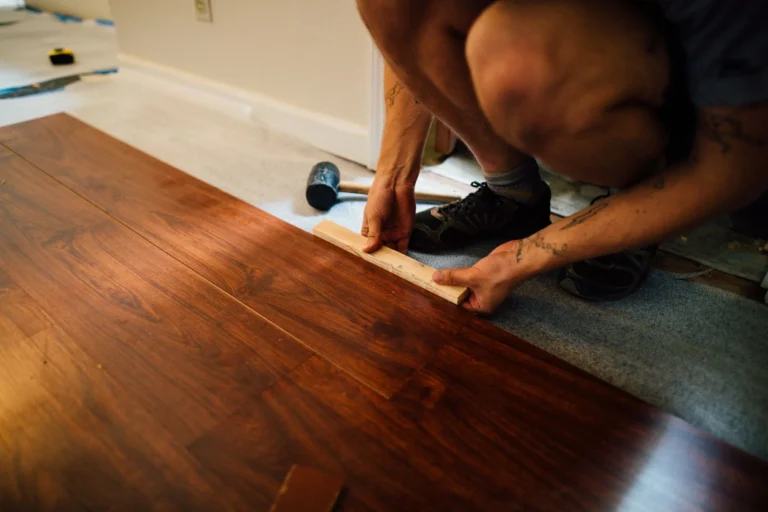
A tight locking joint is the most important moisture-protection feature in any kitchen laminate — water enters through joints, not the surface.
Kitchen Laminate Comparison Table
Product
AC Rating
Thickness
Water Resistance
Price/m²
Warranty
Kronospan Kronotex Mega Plus
AC4
10mm
Moisture-resistant core, wax edges
£14–£18
25 years residential
Quick-Step Impressive Ultra
AC4
12mm
Uniclic sealed joints, 24hr spill resistance
£28–£38
25 years residential
Pergo Original Excellence
AC5
9–14mm
PerfectFold 3.0 tight joints
£38–£55
Lifetime residential
Egger Pro Laminate
AC4
10–12mm
AquaSafe edge treatment
£18–£28
25 years residential
Prices correct at time of publication. Always check current retailer pricing before purchase.
Installation Tips for Kitchen Laminate
Seal the Edges Around the Sink and Appliances
Even with a moisture-resistant laminate, you should apply a silicone sealant bead at the junction between the laminate and the base of the kickboards, and along the edge of the floor where it meets the dishwasher recess. This seals the most common water ingress points without affecting the floating floor’s ability to expand and contract.
Choose the Right Underlay
In kitchens, use an underlay with a built-in damp-proof membrane (DPM) layer — this protects the boards from moisture rising through a concrete subfloor. Most 2-in-1 underlay products (foam with a foil backing) qualify. For kitchens on timber subfloors, a standard foam underlay is fine as long as the subfloor is dry and level.
Leave the Correct Expansion Gap
Kitchen laminate should be fitted with an 8–10mm expansion gap at all walls, around pipes and at doorways. Kitchens experience greater temperature and humidity swings than other rooms, so the expansion gap matters more than in a bedroom installation. Cover the gap with matching scotia or T-bar trims — never fill it with sealant.
Acclimatise Before Fitting
Leave the sealed packs in the kitchen for at least 48 hours before installation. The kitchen environment is typically warmer and more humid than a garage or hallway where packs are often stored. Acclimatising prevents the boards expanding or contracting noticeably after fitting.
When Laminate Isn’t the Right Choice for Kitchens
There are households where we’d recommend against kitchen laminate regardless of specification:
Older dishwashers with a history of leaks: Replace the appliance first, or choose LVT or tile instead.
Ground floor extensions with suspect DPC: Rising damp will damage any laminate. Address the damp issue first.
Households with very young children: Sustained water play or frequent large spills over a year or two will eventually breach even moisture-resistant laminate joints.
Kitchens that are also utility rooms: If you’re running a washing machine with an external vent, the steam exposure is high enough to recommend tile or LVT instead.
For a broader view of what works best in kitchens across all flooring types, including tile and LVT options, see our kitchen flooring ideas UK guide.
For general guidance on the full laminate market, not just kitchens, our best laminate flooring UK guide covers the broader category including living rooms, hallways and bedrooms, with a wider selection of products at all price points.