Kitchen Flooring Ideas UK – Best Options for Style & Practicality
September 28, 2026•admin•8 min read
Kitchen Flooring Ideas UK – Best Options for Style & Practicality
Kitchen flooring ideas that look great in a magazine often ignore the reality of how a British kitchen floor gets used — dropped pans, cooking spills, muddy boots coming in the back door, the dog’s water bowl, and twenty years of daily foot traffic. The best kitchen flooring for UK homes balances genuine practicality with good looks, and ideally does not cost a fortune to replace when fashions change. This guide covers every serious option: tile, LVT, laminate, and wood, with honest pros and cons for each.
What Makes Kitchen Flooring Different?
The kitchen is the most demanding room in a home for flooring. The requirements are:
Water and spill resistance: Not optional. Cooking splashes, pet bowls, leaky appliances, and dropped drinks mean this floor will get wet.
Hardwearing surface: Kitchen chairs scrape across it daily. Heavy pots get dropped. High foot traffic throughout the day.
Ease of cleaning: You need to be able to sweep and mop quickly. Textured or highly porous surfaces that trap food debris are impractical.
Comfort underfoot: Cooks spend hours standing on this floor. Tile is beautiful but unforgiving on knees and feet after a long cooking session.
Kitchen Flooring Options Compared
Flooring Type
Water Resistance
Durability
Comfort
Typical Cost (supply + fit)
Porcelain Tile
Excellent
Excellent
Poor – hard and cold
£35–£80/m²
Luxury Vinyl Tile (LVT)
Excellent
Very good
Good – softer underfoot
£30–£65/m²
Waterproof Laminate
Good (not fully waterproof)
Good
Moderate
£22–£45/m²
Engineered Wood
Poor
Good with care
Very good
£45–£80/m²
Natural Stone
Good (if sealed)
Excellent
Poor – hard and cold
£50–£120/m²
Rubber Flooring
Excellent
Very good
Excellent
£30–£55/m²
Idea 1: Large-Format Porcelain Tiles
Large-format porcelain (600×600 mm or larger) is the most popular kitchen flooring choice in new UK kitchens, and for good reason. It is impervious to water, impossible to scratch, and available in every style from concrete-look grey to warmer terracotta and marble effects. The visual continuity of large tiles with minimal grout lines makes small kitchens feel bigger. Modern printing technology means stone-effect porcelain is genuinely convincing at a glance.
The downsides are real: cold and hard underfoot (fatigue after hours of cooking), grout lines that accumulate grime over time (use an epoxy grout and keep lines narrow), and the need for a very flat and structurally sound subfloor — tile will crack if the subfloor flexes. On a concrete ground floor, porcelain is essentially the perfect kitchen floor. On suspended timber upper floors, you need to check deflection calculations and may need to stiffen the subfloor with an additional layer of Hardiebacker board.
Idea 2: LVT in Wood or Stone Effect
LVT has largely replaced laminate as the go-to affordable kitchen floor in the UK. It is fully waterproof, comfortable underfoot compared to tile, realistic in appearance at quality price points, and easy to fit over existing floors without major height changes. Rigid-core SPC vinyl is particularly good in kitchens — it does not flex across minor subfloor imperfections and feels more solid than flexible sheet vinyl.
For kitchens with underfloor heating, LVT is an excellent pairing — it conducts heat efficiently and its low tog value means the system can work at maximum efficiency. See our guide to underfloor heating compatible flooring for full details.
Idea 3: Waterproof Laminate
Standard laminate is not suitable for kitchens. However, waterproof-core laminate ranges from Quick-Step (Livyn), Balterio, and Pergo offer a middle ground. These boards use a sealed HDF core and tight profile joints that prevent water ingress for up to 72 hours. For light kitchen use in a household without young children, pets, or high spill frequency, this is a reasonable and affordable choice.
Cost is the main advantage: a quality waterproof laminate can come in at £22–£30/m² for supply only, versus £35–£50/m² for equivalent LVT. If budget is the main driver and the kitchen is low-risk for serious water events, this is a defensible choice. See our vinyl flooring vs laminate comparison for a full breakdown.
Idea 4: Engineered Wood for Warmth and Character
Engineered oak in a kitchen is the aspirational choice that a significant number of UK homeowners pursue — and regret when they have not thought it through. Wood in a kitchen looks stunning. It is warm underfoot, quieter than tile, and brings a genuine character that no manufactured product fully replicates.
The honest trade-off: you must accept that the floor will show its life. Spills need cleaning immediately. The area around the sink and dishwasher requires particular care. Use a waxed or oiled finish rather than lacquer — oils are repairable at the surface level when a section gets worn or stained. If you choose wood in a kitchen, understand that you are choosing a material with higher maintenance requirements than tile or LVT, and plan accordingly. Many people make this trade happily and love the result.
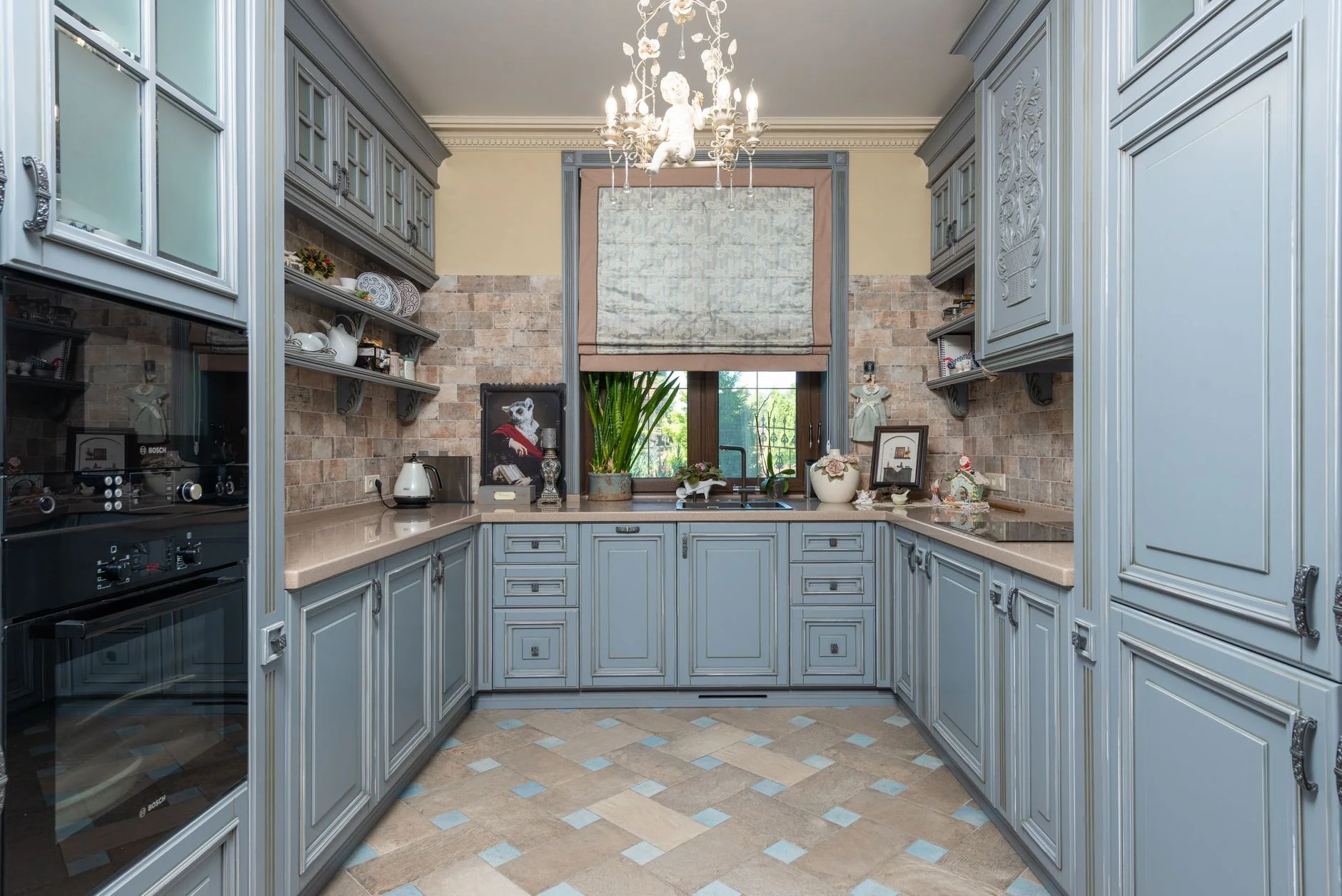
Idea 5: Patterned and Encaustic-Effect Tiles
Patterned tiles — whether genuine encaustic cement tiles or porcelain in encaustic patterns — have been one of the strongest kitchen flooring trends in the UK over the last five years and show no sign of abating. Geometric patterns, Moroccan-inspired designs, and monochrome checkerboard (black and white Victorian chequer is perennially popular in UK kitchens) all add enormous visual interest to a kitchen floor.
Real cement encaustic tiles require sealing before and after grouting, and periodic resealing. Porcelain in encaustic patterns has all the durability of standard porcelain with none of the maintenance demands. Prices for quality patterned porcelain range from £40–£80/m². Karndean also offers LVT in excellent encaustic and parquet effects if you want the pattern without the hardness of tile.
Colours and Finishes for UK Kitchens
UK kitchens often have limited natural light compared to Mediterranean interiors — the choices that work in a sun-drenched Portuguese kitchen may make a north-facing British kitchen feel gloomy. General principles:
North-facing or small kitchens: Favour lighter, warm-toned floors. Pale oak LVT, light grey concrete-look tile, or warm beige stone effects will reflect available light and make the space feel larger.
Larger or south-facing kitchens: Can carry bolder choices — darker slate-effect tile, rich walnut LVT, or patterned encaustic.
Open-plan kitchen-diners: Choose a floor that works in both zones. LVT in a wide plank wood effect tends to transition well from kitchen to dining area.
Avoid very pale grout in kitchens: It will discolour within months despite best cleaning intentions. Choose mid-toned or contrasting grout colours that hide cooking grime.
Order samples of your shortlisted floors and live with them in the kitchen for a few days before ordering. Lighting conditions, cabinet colours, and worktop tones all affect how a floor looks in practice.