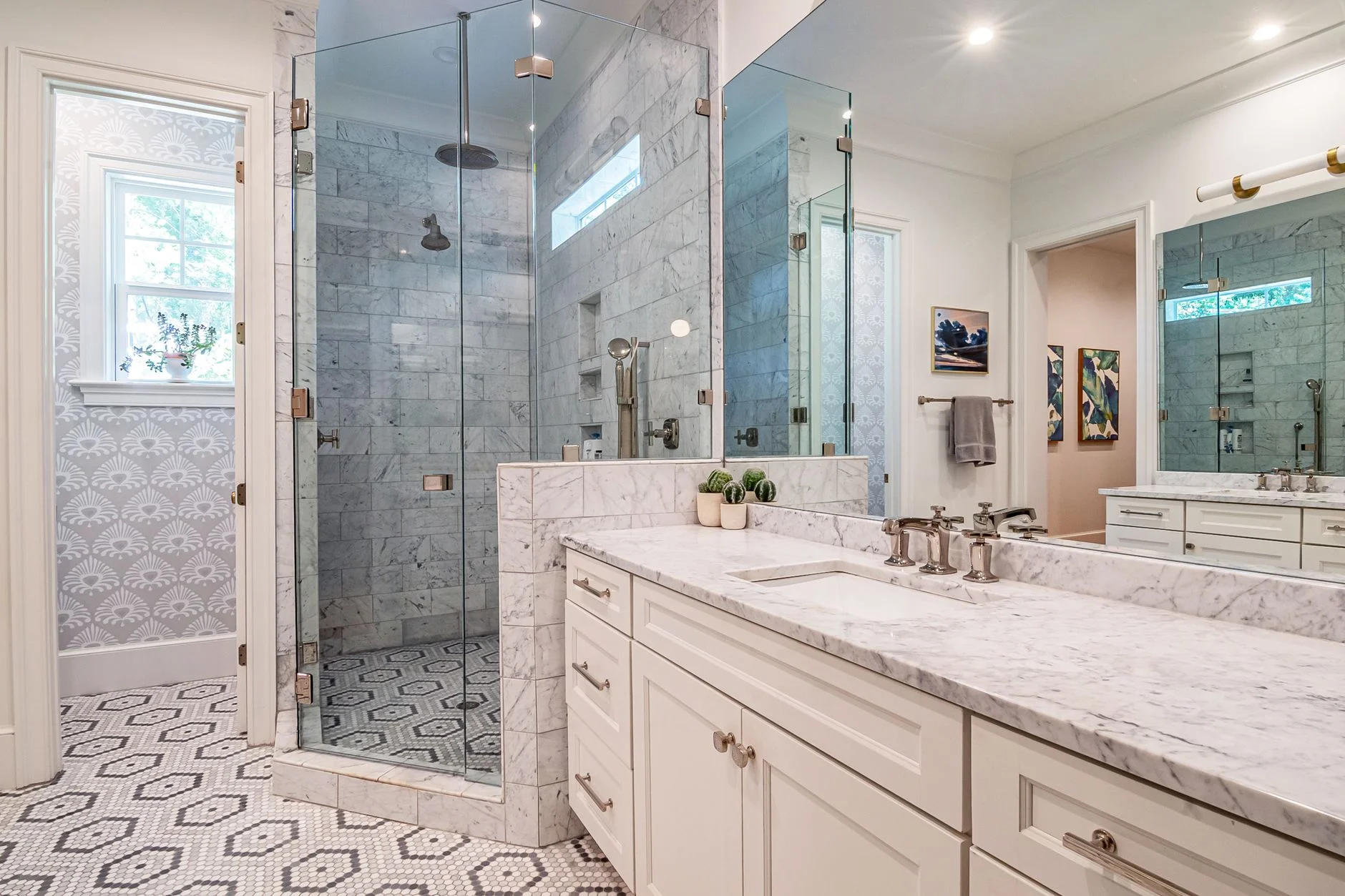
Bathroom Flooring UK – Best Options for Wet Rooms and Family Bathrooms
Bathroom flooring in the UK has one non-negotiable requirement that overrides everything else: it must handle water without failing. That sounds obvious, but thousands of UK homeowners fit laminate, standard wood, or unsealed stone in bathrooms every year and face costly repairs within five years. This guide covers what actually works — from affordable vinyl sheet to premium porcelain — along with the slip resistance ratings that matter for safety, and how to make a small bathroom floor feel bigger through your material and layout choices.
UK Building Regulations and Bathroom Flooring
There are no building regulations in England and Wales that specify what material you must use on a bathroom floor, but there are practical requirements. In wet rooms (where the entire floor is a shower area with no tray), the floor and walls must be tanked — a waterproof membrane applied beneath the tile or surface material. This is a technical requirement for the structure, not the floor covering itself. For standard bathrooms with a shower tray or bath, the floor covering does not require tanking, but it must be capable of handling regular water exposure without damage.
The UK government’s building regulations guidance covers what work in bathrooms requires Building Control notification (generally structural changes or changes to electrical circuits).
Bathroom Flooring Options at a Glance
| Material | Waterproof? | Slip Resistance | Cost (supply + fit) | Suitable for Wet Room? |
|---|---|---|---|---|
| Porcelain Tile | Yes | Good (R9/R10+ matt) | £35–£80/m² | Yes (with tanking) |
| Ceramic Tile | Yes | Good (matt) | £25–£60/m² | Yes (with tanking) |
| LVT / Rigid Vinyl | Yes | Good (textured) | £30–£65/m² | No – not suitable |
| Sheet Vinyl | Yes (if seams sealed) | Good | £15–£35/m² | No – not suitable |
| Natural Stone | Yes (if sealed) | Variable | £55–£130/m² | Yes (with tanking + sealing) |
| Standard Laminate | No | Moderate | £20–£40/m² | No |
| Solid/Engineered Wood | No | Good (oiled) | £50–£100/m² | No |
Porcelain and Ceramic Tile – The Standard Choice
Porcelain tile remains the most popular bathroom floor material in UK homes, and with good reason. It is impervious to water, hygienic, easy to clean, and available in every conceivable style. The critical specification for bathroom floors is slip resistance: choose tiles rated R9 minimum (tested on an inclined plane with oil), and preferably R10 for shower areas and wet rooms. Polished porcelain and high-gloss tiles have very low slip resistance when wet and should be avoided on bathroom floors regardless of how good they look in the showroom.
Large-format tiles (600×600 mm or larger) are popular in contemporary UK bathrooms for their minimal grout lines and clean appearance. Small mosaic tiles (on mesh backing) are the classic wet room choice — the more grout lines, the more grip, which is why 48×48 mm mosaics are so widely used on shower and wet room floors.
Grout Matters
In a bathroom, use an epoxy or stain-resistant grout. Standard cement grout absorbs water and soap residue over time, discolouring and eventually supporting mould growth. Epoxy grout costs more to apply but remains stain-free and mould-resistant for decades. Use a light-to-mid grey colour — white grout in a bathroom always looks dirty within months of use.
LVT – The Modern Practical Alternative
Luxury vinyl tile has become the fastest-growing bathroom flooring choice in the UK because it solves tile’s main problems: it is warm and soft underfoot, it is fully waterproof, and it requires no grouting. For family bathrooms where children are splashing around and comfort matters, LVT is a genuinely appealing alternative to cold tile.
The limitation is that LVT cannot be used in wet rooms where the floor itself acts as a shower area. The joints between LVT planks or tiles, while water-resistant, are not fully sealed — sustained water ponding on the joints will eventually penetrate. LVT is excellent for standard bathrooms; it is not the right choice for wet rooms.
For an LVT bathroom, ensure the bathroom sub-floor is in good condition and fully flat. Rigid-core SPC LVT is better in bathrooms than flexible LVT because it bridges minor subfloor imperfections without telegraphing through. Brands like Karndean and Amtico both offer LVT ranges specifically tested and marketed for bathroom use.
Sheet Vinyl – The Budget-Conscious Choice
Sheet vinyl is often overlooked but remains a perfectly valid bathroom floor choice, particularly in rental properties, children’s bathrooms, and anywhere that budget is the primary constraint. Modern cushioned sheet vinyl is warm underfoot, water-resistant (especially if the seams are heat-welded or fully adhered and sealed), and easy to clean. It can also be fitted in one piece in a small bathroom with no joints at all — making it genuinely watertight in a way that any click-together product is not.
Quality sheet vinyl for bathrooms (Polysafe, Altro, or Polyflor brands) is available from around £15–£25/m² for supply, with fitting costs adding another £10–£15/m². Budget for perimeter sealant if the vinyl does not fully cover the room edge-to-edge.
Natural Stone in Bathrooms
Travertine, slate, limestone, and marble all appear regularly in upmarket UK bathrooms. They are beautiful, genuinely unique, and add genuine value to a property. The maintenance requirements are serious:
- All natural stone must be sealed before grouting and periodically resealed — typically every 1–2 years depending on use
- Unsealed stone absorbs water, soap, and shampoo, leading to permanent staining
- Many natural stones (travertine especially) are slippery when wet — specify a honed or brushed finish, not polished
- Marble is particularly prone to etching from acidic bathroom products (some shower gels, toilet cleaners)
If you want the look of stone with less maintenance, the porcelain stone-effect alternatives have become extremely convincing and offer far better slip resistance, no sealing requirement, and lower cost.
Making a Small Bathroom Feel Bigger With Flooring
Most UK bathrooms are small. Flooring choices affect how spacious the room feels:
- Large format tiles (600×600 mm+): Fewer grout lines make the floor look more expansive
- Light, neutral colours: Pale grey, warm white, or stone tones reflect light and open the space
- Diagonal laying pattern: Tiles or LVT laid on a 45° diagonal can make a narrow room feel wider
- Floor-to-wall continuity: Using the same tile or a very similar material on both floor and walls (a popular modern approach) removes the visual break at the wall-floor junction and makes the room read as larger
- Minimal grout lines: Rectified tiles (precisely cut to accurate dimensions) allow grout lines as narrow as 2–3 mm
Fitting Costs in the UK
Professional tile fitting for a bathroom typically runs £25–£45/m² for labour alone, reflecting the skill required for accurate setting out, cutting around toilets and baths, and maintaining correct falls on wet room floors. LVT or vinyl fitting is cheaper at £10–£18/m². Always use a Checkatrade-verified tiler for bathroom tile work — poor adhesive coverage or inadequate waterproofing behind tiles is only discovered when water damage appears, sometimes months later. Find vetted bathroom fitters through Checkatrade’s bathroom installer directory.
For more flooring comparisons relevant to wet areas, see our guide on vinyl flooring vs laminate, and if you are also renovating your kitchen at the same time, our kitchen flooring ideas post covers the same decisions from a kitchen perspective.
Bathroom flooring work that involves moving or adding drainage, altering electrical circuits, or structural changes may require Building Control notification — check with your local authority or a qualified tradesperson before starting work.