Underfloor Heating Compatible Flooring – What Works and What Doesn’t
September 29, 2026•admin•8 min read
Underfloor Heating Compatible Flooring – What Works and What Doesn’t
Underfloor heating compatible flooring is not a marketing phrase — it is a genuine engineering requirement. Lay the wrong material over a UFH system and you face two problems: the floor may be damaged by heat cycling, and the insulating properties of some materials prevent the heat from reaching the room efficiently. With UK underfloor heating installations now standard in new-builds and increasingly popular in renovations, choosing the right flooring first time is essential.
The Golden Rule: Thermal Resistance (Tog Value)
Every floor covering and underlay combination has a thermal resistance measured in tog. The higher the tog, the better the insulation — which is great for warmth underfoot but terrible for UFH efficiency. Heat generated at the subfloor level struggles to pass through a high-tog assembly, forcing the system to run longer and hotter just to warm the room.
Most UFH manufacturers specify a maximum combined tog value of 0.15 tog for the entire floor build-up (flooring + underlay). Some systems allow up to 0.20 tog. Exceed this, and you will almost certainly void your UFH system warranty and risk overheating the pipework.
Flooring Options Compared for UFH Compatibility
Flooring Type
UFH Compatible?
Typical Tog
Notes
Porcelain / Ceramic Tile
Excellent
0.01–0.03
Best conductor of heat; the ideal UFH pairing
Luxury Vinyl Tile (LVT)
Excellent
0.03–0.08
Check max temp rating; most are 27–30°C
Engineered Wood
Good
0.05–0.12
Must be UFH certified; max surface temp 27°C
Laminate
Good (if UFH rated)
0.05–0.10
Use UFH-specific boards and low-tog underlay
Solid Wood
Limited
0.08–0.15
Narrow boards only; strict temp control needed
Carpet
Poor
0.30–1.50+
Heavy carpet essentially blocks UFH heat output
Natural Stone
Excellent
~0.01
Heavy – ensure subfloor can bear the load
Tile and Stone – The Best UFH Flooring
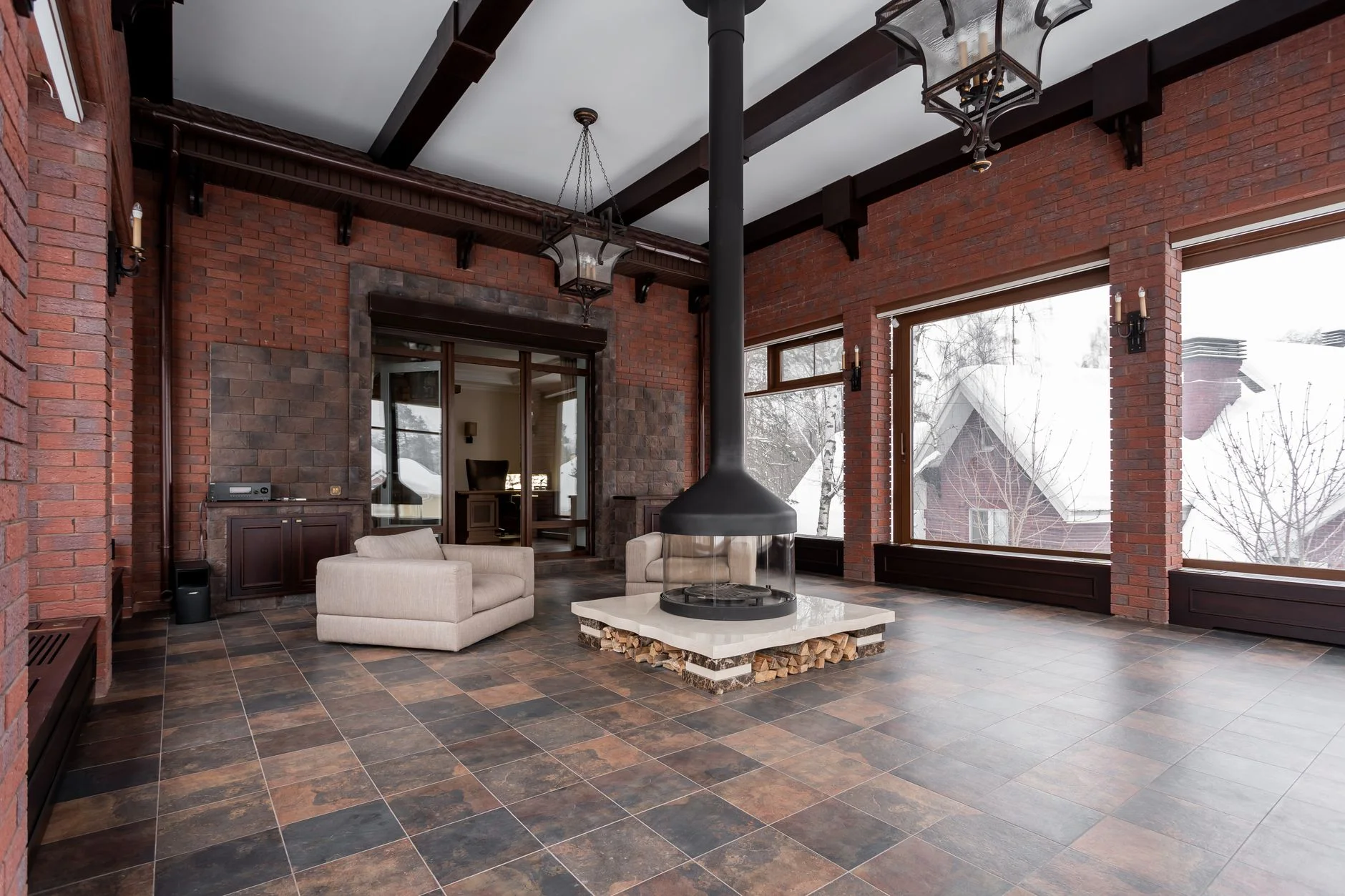
Porcelain and ceramic tiles are the gold-standard pairing for underfloor heating. Stone and ceramic conduct heat exceptionally well, heat up quickly, and retain warmth even after the system cycles off. A tiled floor over wet UFH feels noticeably warm within 15–30 minutes of the system starting. The only downsides are cost (tiling plus adhesive plus the subfloor prep can be significant), hardness underfoot, and the fact that tile does not forgive subfloor movement — in older UK homes with suspended timber floors, tile over UFH is rarely advisable without major structural work.
LVT – The Practical All-Rounder
Luxury vinyl tile has become the go-to UFH flooring for UK homeowners who want warmth underfoot without the hardness of tile. Modern LVT is 100% waterproof, dimensionally stable, and its low tog value means it transfers UFH heat efficiently. Most reputable LVT products — Karndean, Amtico, and Polyflor are the leading UK brands — publish their tog values and maximum temperature ratings on the product data sheets.
Check the maximum surface temperature specification before buying. Most LVT is rated to 27°C surface temperature. Exceed this consistently and the adhesive bond can fail, or the boards may expand and buckle. A good UFH controller with floor sensor is essential — the Which? guide to thermostats explains floor-sensing thermostats in more detail.
Engineered Wood Over UFH
Engineered wood can work beautifully over underfloor heating when specified and fitted correctly. The key rules are:
The board must be explicitly certified for use over UFH — not all engineered products are.
Maximum surface temperature is 27°C — this must be controlled by a thermostat with a floor probe, not just an air probe.
Use a low-tog underlay rated for UFH. Standard 5 mm foam underlay can add 0.15 tog on its own, which exceeds most UFH limits before you even account for the floor covering.
Acclimatise the boards for at least 48 hours in the room before fitting.
Commission the UFH gradually after fitting — start at 15°C and raise by 5°C per day up to operating temperature.
Laminate is compatible with underfloor heating if — and only if — you choose a board labelled “suitable for underfloor heating.” This is not a blanket approval across all laminate. The HDF core in standard laminate can dry out and shrink under repeated heat cycling, leading to gaps between boards. UFH-rated laminate uses a denser, more stable core compound. Quick-Step and Pergo both offer UFH-compatible ranges in the UK. The same 27°C surface temperature limit applies.
Carpet – Proceed with Caution
Carpet is not impossible over UFH, but it is inefficient. A typical wool carpet with a felt underlay can have a combined tog value of 2.0 or more — ten times the recommended maximum. The UFH system will run almost continuously and still struggle to heat the room. If you want carpet over UFH, you need a thin, low-tog carpet (no more than 1.5 tog for carpet and underlay combined) specifically designed for the purpose. The UK government’s guidance on home heating notes that poorly specified insulation layers are a common cause of UFH inefficiency.
Wet UFH vs Electric UFH – Does it Change the Flooring Choice?
The tog guidance applies to both wet (water-based pipes) and electric (mat or cable) systems. However, electric UFH heats up faster and can reach higher surface temperatures more quickly if unchecked. A floor-sensing thermostat is even more important with electric systems. Electric UFH is also typically used as supplemental heating in single rooms (bathrooms, kitchens) rather than whole-house heating, which limits the flooring consequence — but the temperature limit still applies.
Underlay for UFH – What to Look For
Standard underlay is the most common mistake people make when fitting flooring over UFH. You need an underlay specifically designed for UFH — these are thin (typically 1.5–3 mm), often foil-backed, and have a tog value of 0.06 or less. Products like Duralay Heatflow and Tredaire UFH are widely available in UK flooring retailers. Budget around £3–£4/m² for a quality UFH-compatible underlay, which is less than many standard underlays.
For fitting help, Checkatrade’s UFH installer directory lists vetted professionals who can advise on system commissioning as well as floor installation.
Always check individual product data sheets for tog values and temperature ratings. System warranties vary by manufacturer — confirm UFH compatibility in writing with your flooring supplier before purchase.